
Categories List
 Global PV Industry 2025: Navigating Diversification and Breakthroughs Amid Policy Shifts
 PV Industry’s Anti-Involution Campaign Bears Fruit: Marching Toward Value Reconstruction in 2025
 PV Industry Enters Critical Transformation: From Scale Expansion to Value Creation
 PV Industry Enters Critical Juncture: From Quantity Expansion to Quality Breakthrough


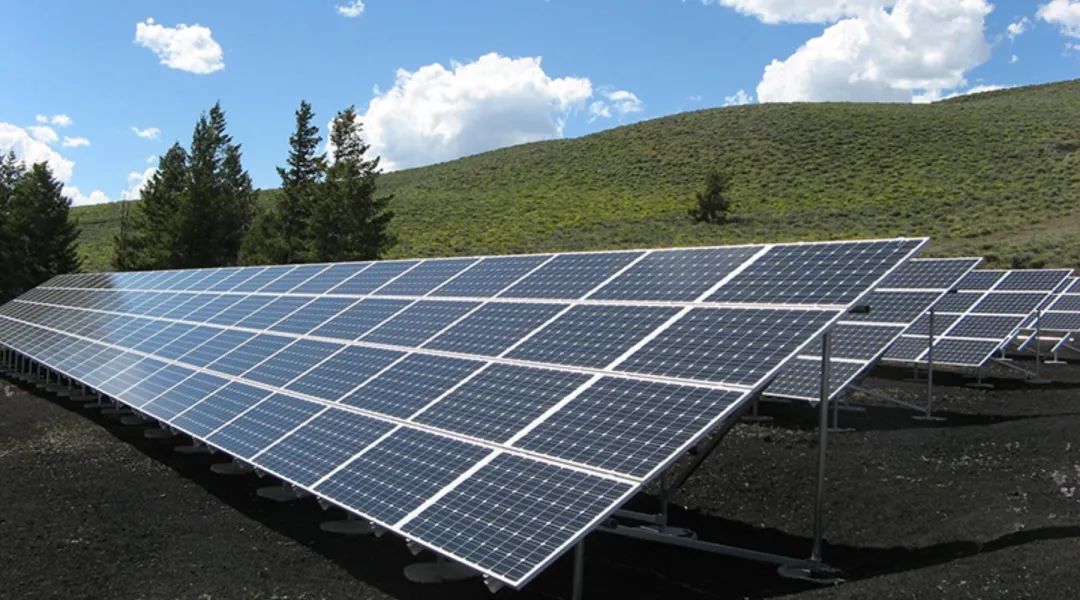

Global PV Industry 2025: Navigating Diversification and Breakthroughs Amid Policy Shifts
JSJA, December 23, 2025
Market Dynamics: Contrasting Trends Between Developed and Emerging Markets
China's PV Exports Defy Headwinds
Despite tightened restrictions from traditional markets, China's PV exports have demonstrated remarkable resilience. From January to October 2025, Chinese PV products were exported to 128 countries and regions worldwide, with export values doubling in 50 of these markets. This growth momentum is primarily fueled by emerging economies in Africa, the Middle East, and Latin America, where surging energy demand and favorable solar resources drive massive project development.
Notably, African markets have emerged as a key growth engine. On December 16, 2025, the 120 MWp Kairouan Solar Photovoltaic Project in Tunisia was officially commissioned, marking the country's first utility-scale PV project exceeding 100 MW. Financed in part by the African Development Bank with a $25 million investment, the project will generate 222 GWh of clean electricity annually, powering 43,000 households and reducing CO₂ emissions by 117,000 tonnes yearly. Such large-scale projects underscore the enormous potential of African markets in driving global PV growth.
Global Market Diversification Intensifies
The global PV market has split into two distinct trajectories. In developed economies, policy restrictions have constrained demand growth: EU exports of Chinese PV modules fell by 38.8% year-on-year in Q1 2025, with export volume dropping 15.6% to 18.6 GW. Meanwhile, emerging markets are experiencing robust expansion, with global PV investments rising 15% year-on-year, largely directed toward utility-scale projects in resource-rich regions. The International Energy Agency (IEA) reports that solar PV accounts for over 70% of the absolute reduction in renewable energy costs, further stimulating demand in price-sensitive emerging economiesIEA.
Manufacturing & Globalization: Restructuring Supply Chains to Bypass Barriers
Faced with mounting trade barriers, Chinese PV enterprises have accelerated global supply chain restructuring, shifting from "Made in China, Sold Globally" to "Globally Manufactured, Locally Supplied." Major players including Longi Green Energy and Trina Solar have established integrated production bases in Southeast Asia, India, and Europe, covering silicon wafers, cells, and modules. This strategic shift not only helps evade tariffs but also positions companies to meet local content requirements.
However, trade protectionism continues to escalate. In April 2025, the U.S. imposed new tariffs on solar products from Cambodia, Vietnam, Thailand, and Malaysia, targeting Chinese-owned manufacturing facilities in these countries. More recently, the U.S. Department of Commerce launched anti-dumping and countervailing duty investigations on PV cells from India, Indonesia, and Laos, alongside a Section 232 national security investigation into polysilicon imports, forming a comprehensive blockade on Chinese PV exports to the U.S. market.
Technological Innovation: Perovskite Breaks 30% Efficiency Barrier
Perovskite Technology Achieves Critical Milestone
2025 has witnessed a transformative breakthrough in perovskite solar cell technology. A joint Chinese research team led by Nanjing University and the National Sciences Institute of Innovation developed a dipolar passivation layer and non-destructive terahertz detection technique, enabling a perovskite solar cell to achieve a certified efficiency of 30.1%—the first time this technology has surpassed the 30% thresholdNCSTI. This breakthrough addresses long-standing energy loss issues by improving charge mobility by over 68%, paving the way for commercialization.
The research, published in Nature, provides a practical strategy for enhancing perovskite cell performance while maintaining affordability. Industry analysts predict that large-scale production of perovskite modules could begin as early as 2026, with potential applications in building-integrated photovoltaics (BIPV) and portable energy devices due to their lightweight and flexible properties.
Expanding Downstream Applications
Industry Challenges: Balancing Growth and System Constraints
Persistent Trade and Grid Challenges
While emerging markets drive growth, trade friction remains a significant headwind. The EU's classification of PV technology as "high external dependence risk" (with over 50% supply from third countries) could lead to additional export restrictions. Meanwhile, aging grid infrastructure in Europe poses a bottleneck to renewable energy integration—around 40% of the EU's distribution networks are over 40 years old, requiring an estimated €375-425 billion in modernization investments by 2030.
In China, despite strong installation growth, grid connection constraints persist in some regions, highlighting the need for coordinated development of energy storage and grid infrastructure to support the country's 650 GW PV installed capacity target.
Cost and Commercialization Pressures
Outlook: Policy and Technology Drive High-Quality Development
Policy Support for Sustainable Growth
China's 14th Five-Year Plan reaffirms the target of increasing non-fossil energy's share to 20% by 2025, providing long-term policy stability for the PV industry. Globally, the urgent need for energy security and carbon neutrality commitments continues to underpin PV demand, with emerging economies expected to drive most growth in the coming decade.
Technological Diversification Shapes the Future
The next 3-5 years will see intensified competition between perovskite and crystalline silicon technologies. Perovskite-silicon tandem cells, with theoretical efficiencies exceeding 40%, are poised to become the next-generation mainstream technology, while crystalline silicon will continue to evolve through efficiency improvements and cost optimization. This technological diversification will enhance the industry's resilience and drive further cost reductions.
Emerging Markets as Growth Engines
Africa, the Middle East, and Southeast Asia will remain the primary growth drivers, supported by abundant solar resources and urgent energy access needs. The African Development Bank's support for projects like Tunisia's Kairouan solar plant signals increasing international investment in the region's renewable energy sector, creating significant opportunities for global PV companies with localized production capabilities.
As 2025 concludes, the global PV industry is navigating a period of profound transformation. While trade barriers and infrastructure constraints present challenges, technological innovation and emerging market growth offer powerful momentum for development. For industry participants, success will depend on adapting to regional policy requirements, investing in cutting-edge technologies, and building resilient global supply chains. As the cornerstone of the global energy transition, the PV industry is well-positioned to drive sustainable growth and contribute to the achievement of global carbon neutrality goals.
Get in Touch